Suno Monetization on YouTube: The Real Math (2026)
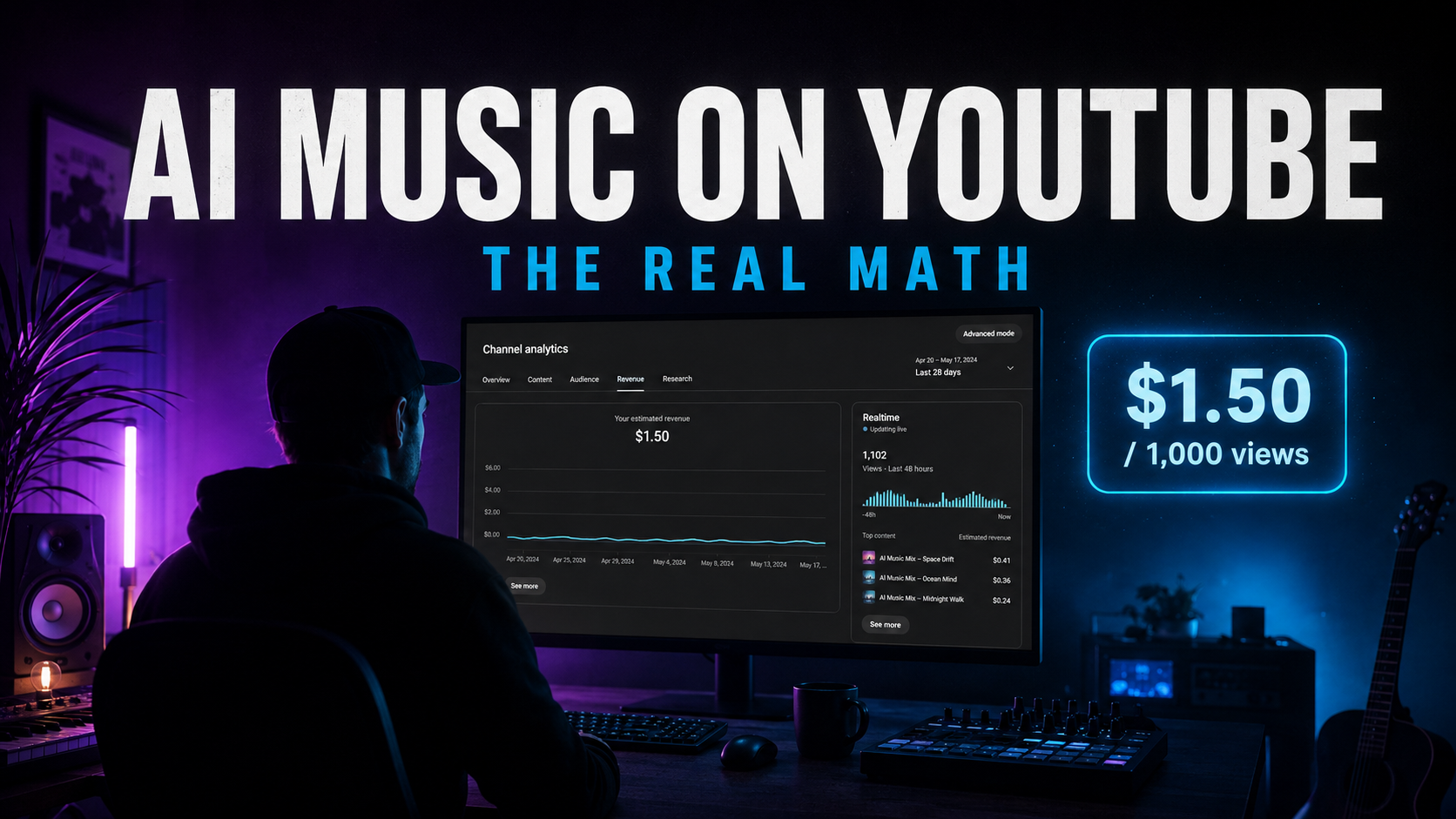
At real music-channel RPMs, an AI music video earns about $1.50 per 1,000 views from ads. We show the arithmetic — and the routes that pay 5–12× more from the same video.
Contents7 sections
- Can I Sell Music I Made With AI?
- The RPM Math: What an AI Music Video Actually Earns
- YouTube's Three Rule Systems for AI Music
- Content ID: The Claim You Can't File
- How to Sell Suno Songs When the Video Is Your Asset
- How to Make Money From Suno Music: Every Route, Ranked
- Suno Monetization at Scale: What Changes
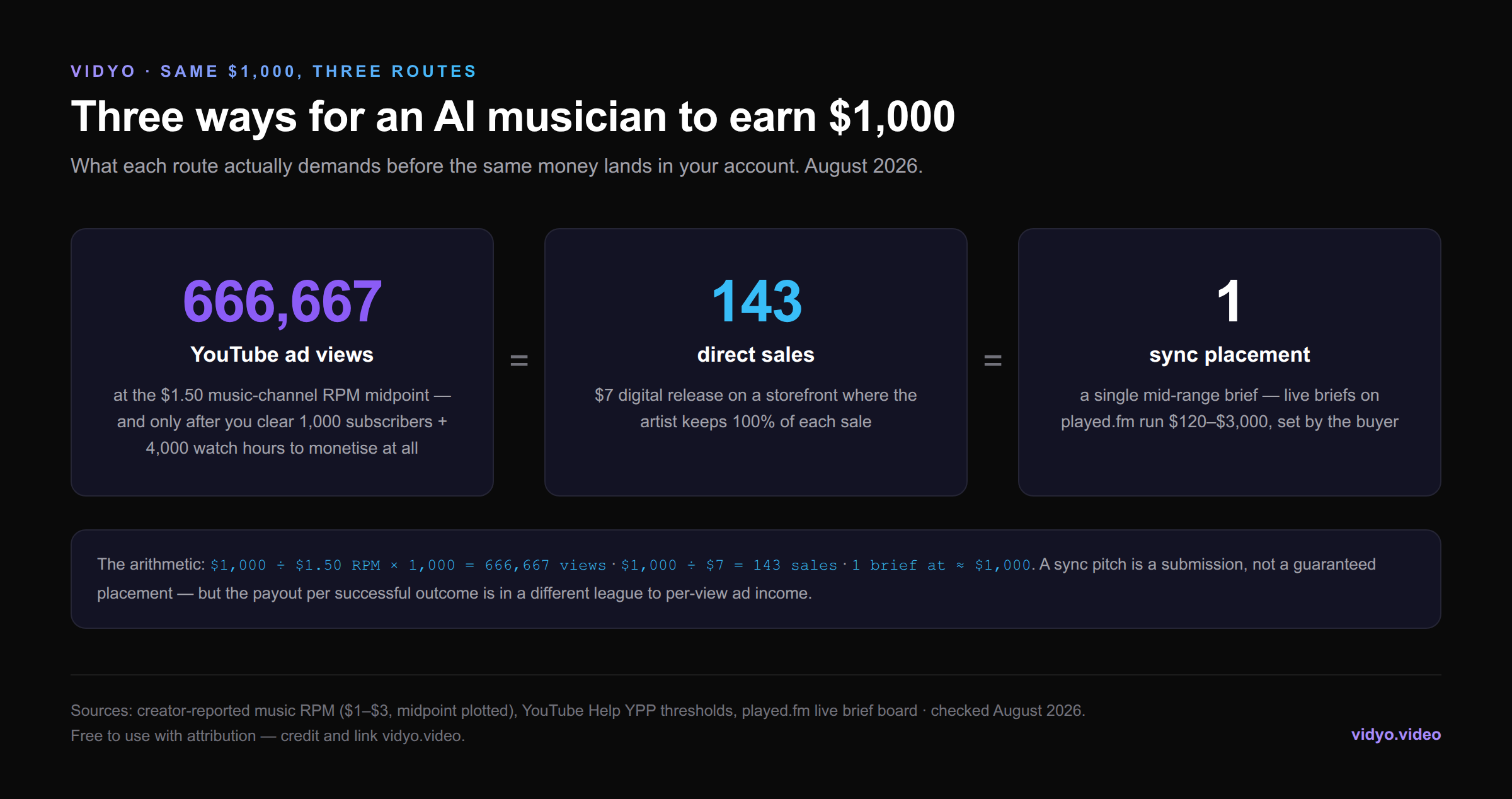
Here is the number nobody puts in the thumbnail: at the RPMs music channels actually report, an AI music video needs about 666,667 views to earn $1,000 from YouTube ads. The same $1,000 is 143 direct sales of a $7 release, or one mid-range sync placement. We did the arithmetic below, with every assumption stated.
This is the YouTube half of the AI-music money question, written for artists whose main asset is a strong music video. By the end you'll know exactly what YouTube pays for AI music and why, which of its three rule systems can take that money away, why Content ID — the tool that protects every label's revenue — is structurally closed to wholly AI-generated tracks, and what to do instead. Every rate and quote was checked against the primary source in August 2026.
Can I Sell Music I Made With AI?
Yes — selling is a licensing question, and the licence is the easy part. Whether you can monetise it well on YouTube is the harder question, and the answer depends on two documents most artists never read.
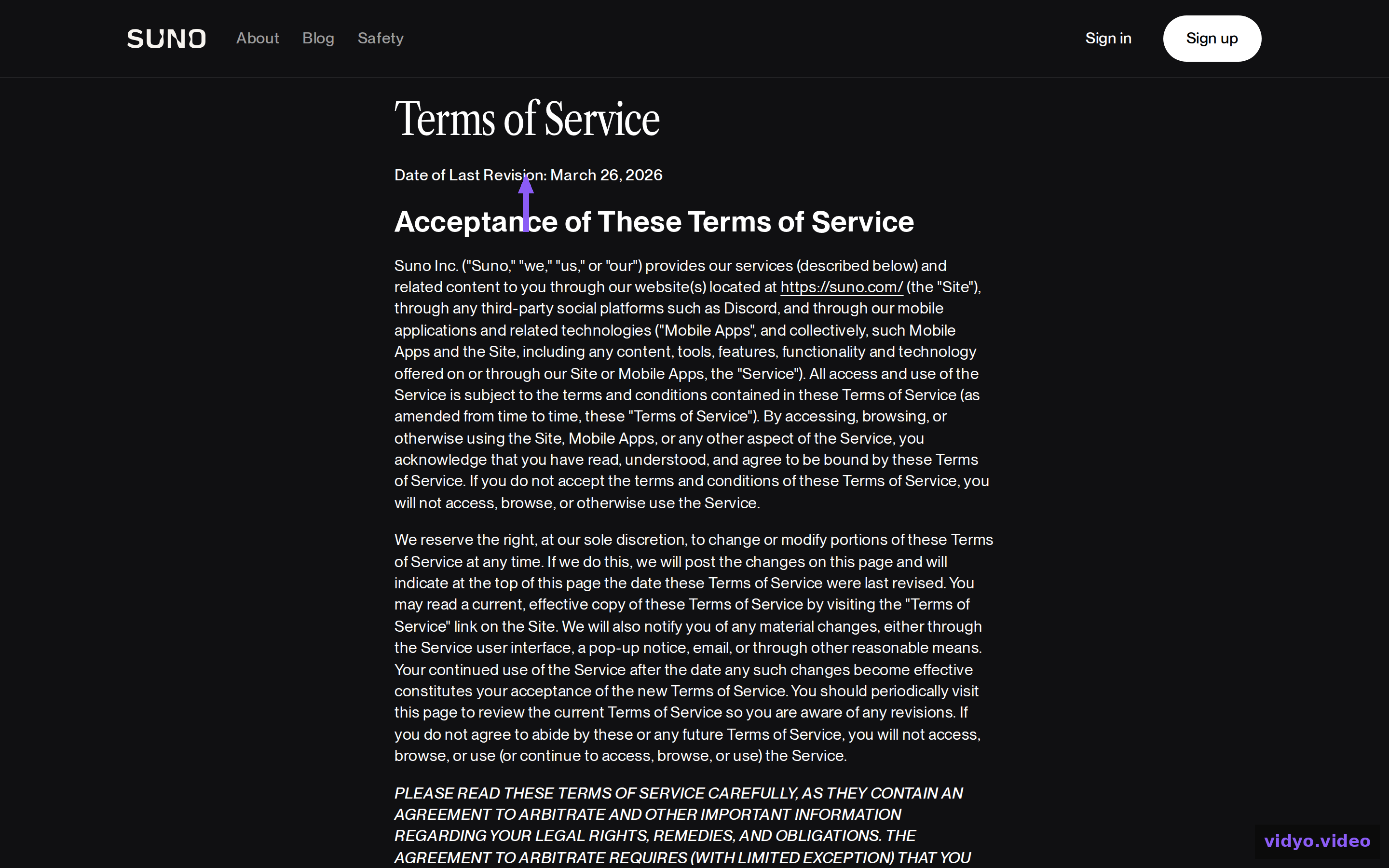
The first is Suno's terms of service (last revised March 26, 2026). On the free tier, outputs stay Suno's property and you agree to use them "solely for your lawful, internal, personal and non-commercial purposes." No YouTube monetisation, no sales, full stop. On a paid plan the position flips: "Suno hereby assigns to you all of its right, title and interest in and to any Output" generated while you're subscribed, with commercial use allowed. If you're serious about money, the subscription is the cost of doing business — generate the track on a paid plan before you build a release around it.
The second document is US copyright law, and here Suno itself is refreshingly blunt: "Suno makes no representation or warranty to you that any copyright will vest in any Output." None does, if the work is wholly AI-generated — the Copyright Office said so in January 2025, and the Supreme Court's refusal to hear Thaler v. Perlmutter in March 2026 settled the human-authorship requirement. The full ownership picture — what registers, what doesn't, and what a hybrid human-plus-AI work can protect — is covered properly in Artifactr's guide to who owns an AI song, so we won't re-argue it here.
What matters for this article is the practical asymmetry: a licence lets you sell; only a copyright lets you stop others. You can sell Suno music all day. What you cannot do is wield the enforcement tools — Content ID above all — that make other people's re-uploads of your song pay you. We'll get to exactly why in a moment.
The RPM Math: What an AI Music Video Actually Earns
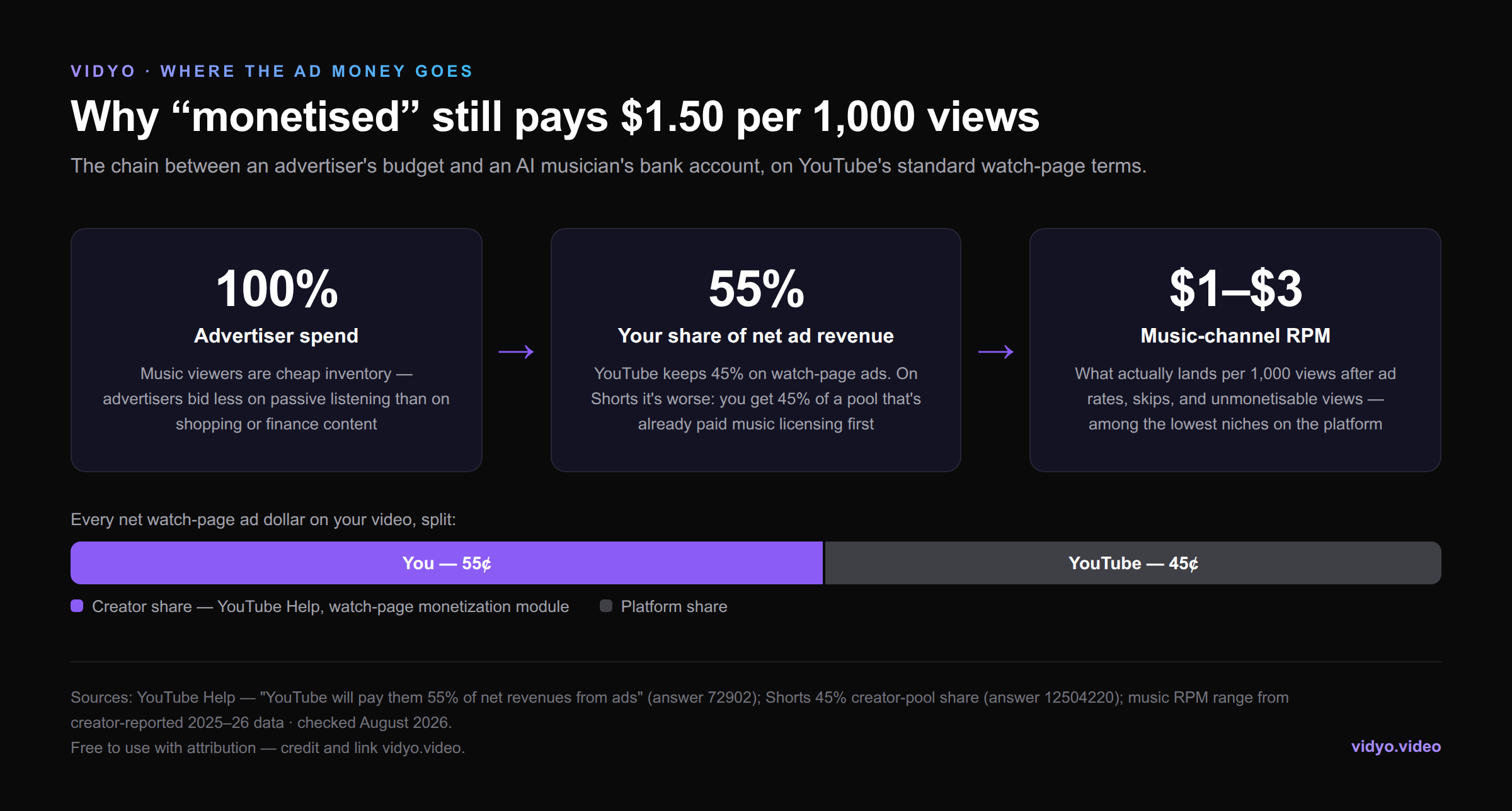
RPM — revenue per thousand views, after YouTube's cut — is the only ad number that matters, and for music it is brutal. Creator-reported figures across 2025–26 put music channels at roughly $1–$3 RPM, one of the lowest niches on the platform. We use the $1.50 midpoint in every calculation below; swap in your own number and the ranking doesn't change.
Why so low? Follow the dollar. Advertisers bid less on passive music listening than on shopping or finance intent. YouTube then keeps 45% of net watch-page ad revenue — its Help Center states creators get "55% of net revenues from ads" — and Shorts are worse: you get 45% of a creator pool that has already paid music licensing off the top. What survives, after skipped ads and unmonetisable views, is the $1–$3 that lands in your AdSense.
Now run the comparison we built this article around. Take the same 1,000 people and route them four different ways:
- YouTube ads: 1,000 views × $1.50 RPM = $1.50
- Spotify streams: 1,000 streams ≈ $3.00 (Duetti's Music Economics Report puts Spotify at ~$3 per 1,000; the all-platform 2024 average was $3.41)
- Direct sales, pessimistic: 1 buyer per 1,000 viewers (0.1%) × $7 release, kept in full = $7.00 — 4.7× the ad income
- Direct sales, moderate: 2.5 buyers per 1,000 (0.25%) × $7 = $17.50 — 11.7× the ad income
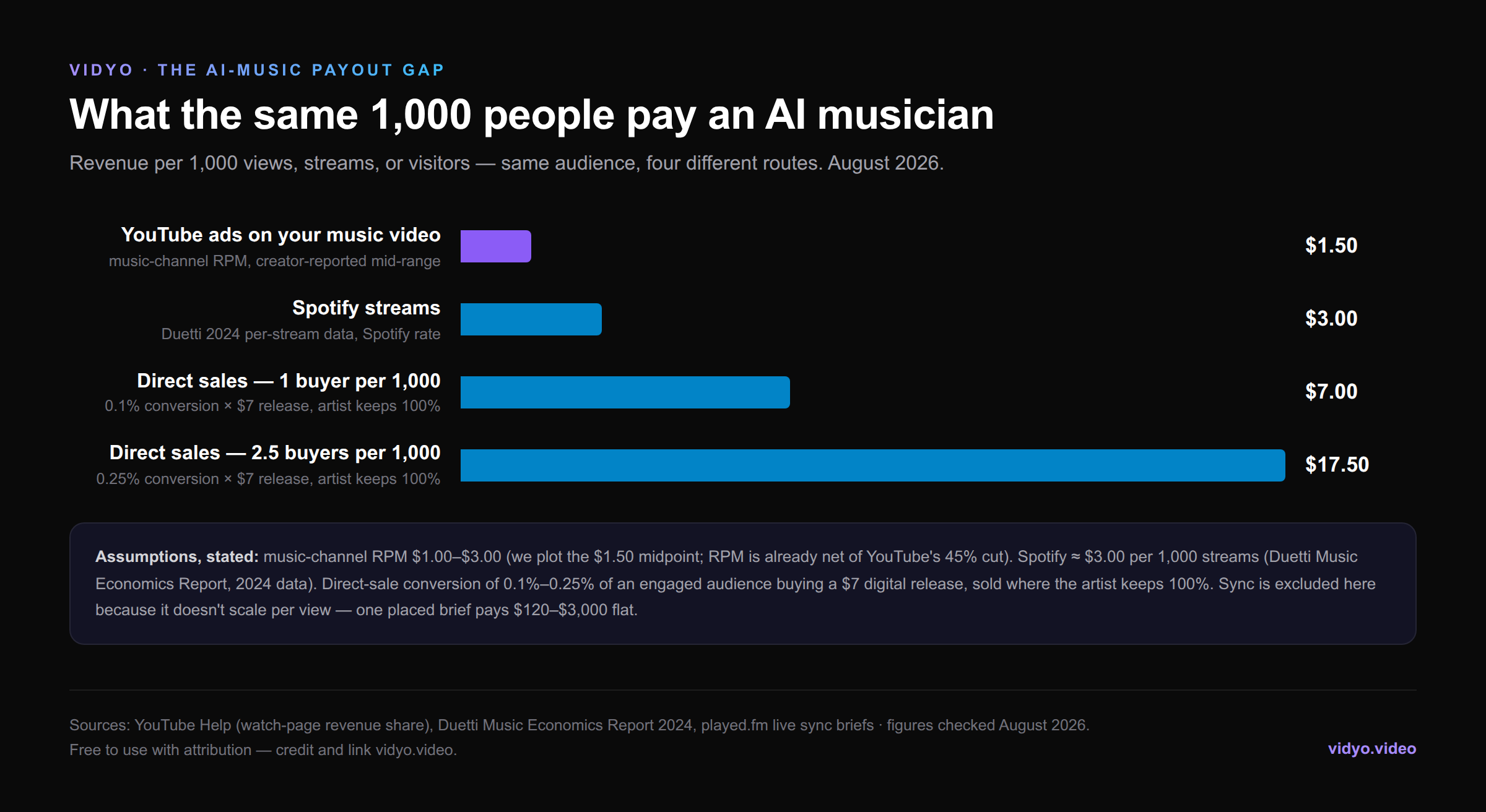
Our assumptions, so you can attack them: RPM is already net of YouTube's share. The $7 price is a normal direct-to-fan single-release price. The 0.1%–0.25% conversion band assumes an engaged audience — people who chose to watch your video — not cold traffic; if your audience converts at even half our pessimistic case, direct sales still beat ads by more than double. Sync doesn't appear in the per-1,000 chart because it doesn't scale per view: a placed brief pays $120–$3,000 flat, whether one person sees the show or a million do.
And one gate the arithmetic skips: ads pay nothing until YouTube lets you in. The Partner Program requires 1,000 subscribers plus 4,000 public watch hours in 12 months (or 10 million Shorts views in 90 days). Direct sales and sync pitches work from fan number one.
YouTube's Three Rule Systems for AI Music
Three separate rulebooks decide what happens to an AI music channel, and they're routinely confused with each other. Getting them straight is the difference between a demonetisation you saw coming and one that blindsides you.
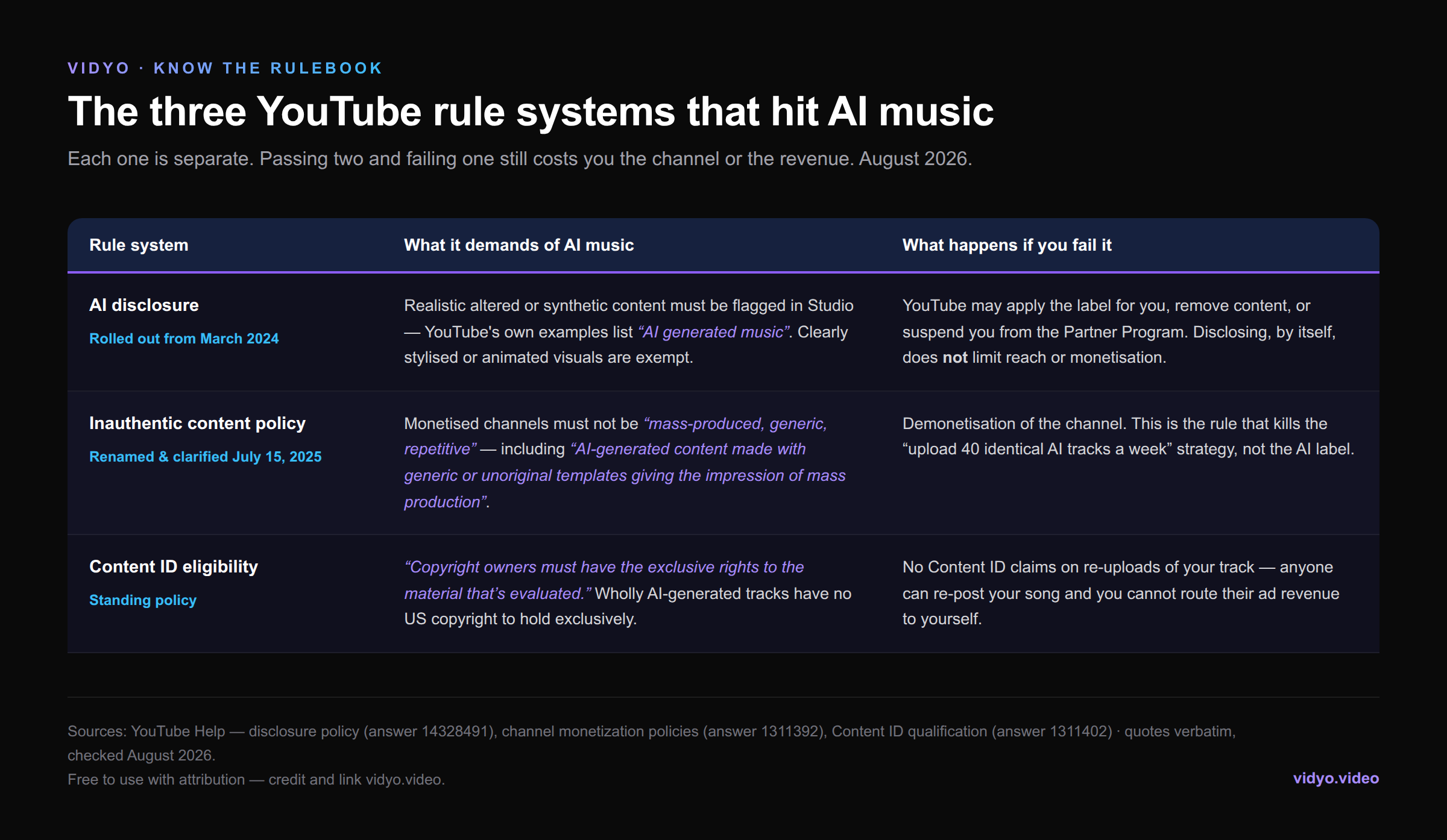
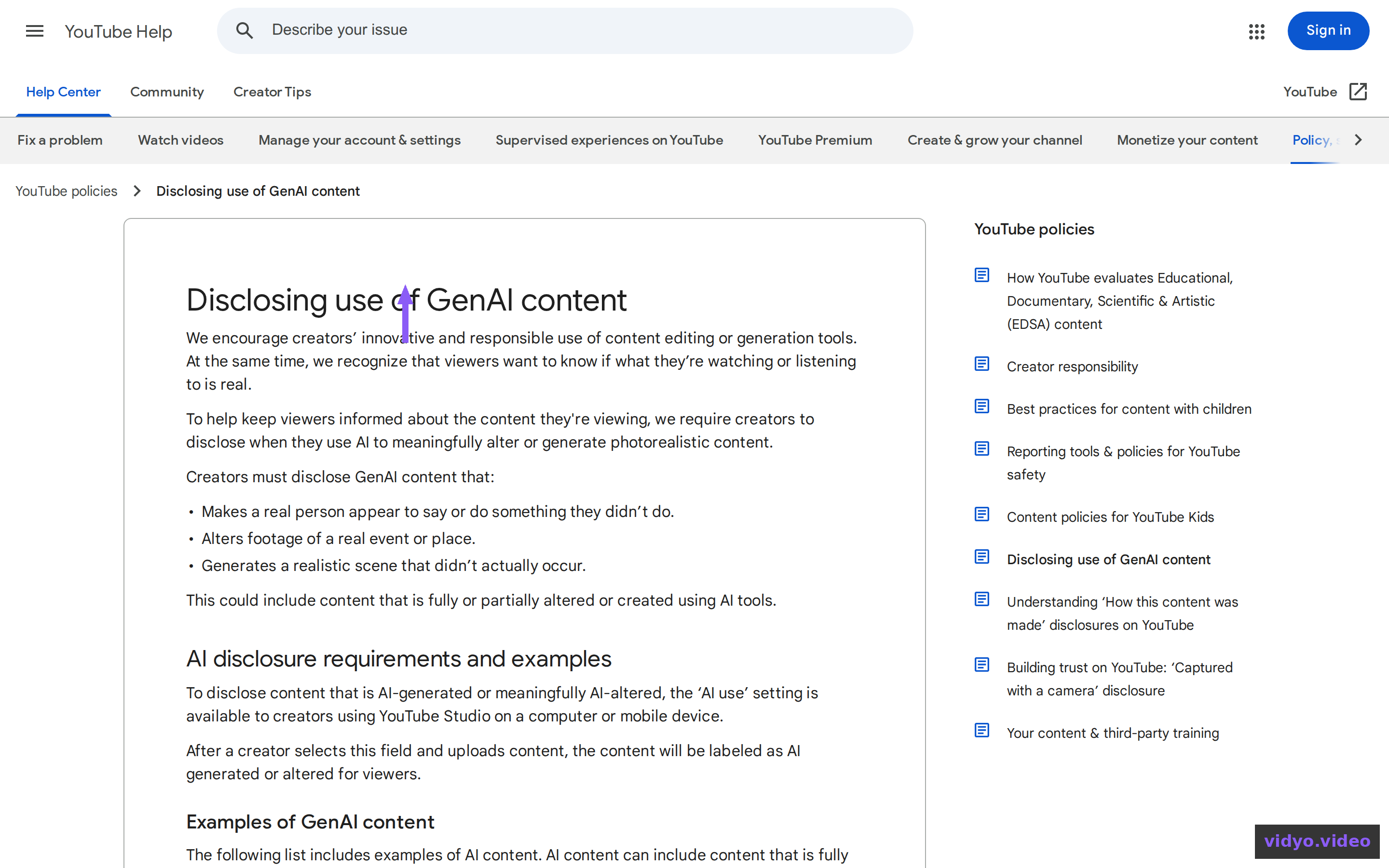
Rule 1 — AI disclosure. Since March 2024, realistic altered or synthetic content must be flagged in YouTube Studio's "altered content" setting, and YouTube's own examples list "AI generated music." The label lands in the expanded description (or on the video itself for photorealistic content). Two things creators get wrong: first, clearly stylised content — an animated Vidyo-style visual, say — is exempt; it's the realistic that triggers the requirement, though the synthetic song itself still qualifies. Second, disclosure is not a punishment: YouTube states plainly that disclosing "won't limit a video's audience or impact its eligibility to earn money." The penalty is for hiding it — persistent non-disclosure risks forced labels, content removal, or suspension from the Partner Program.
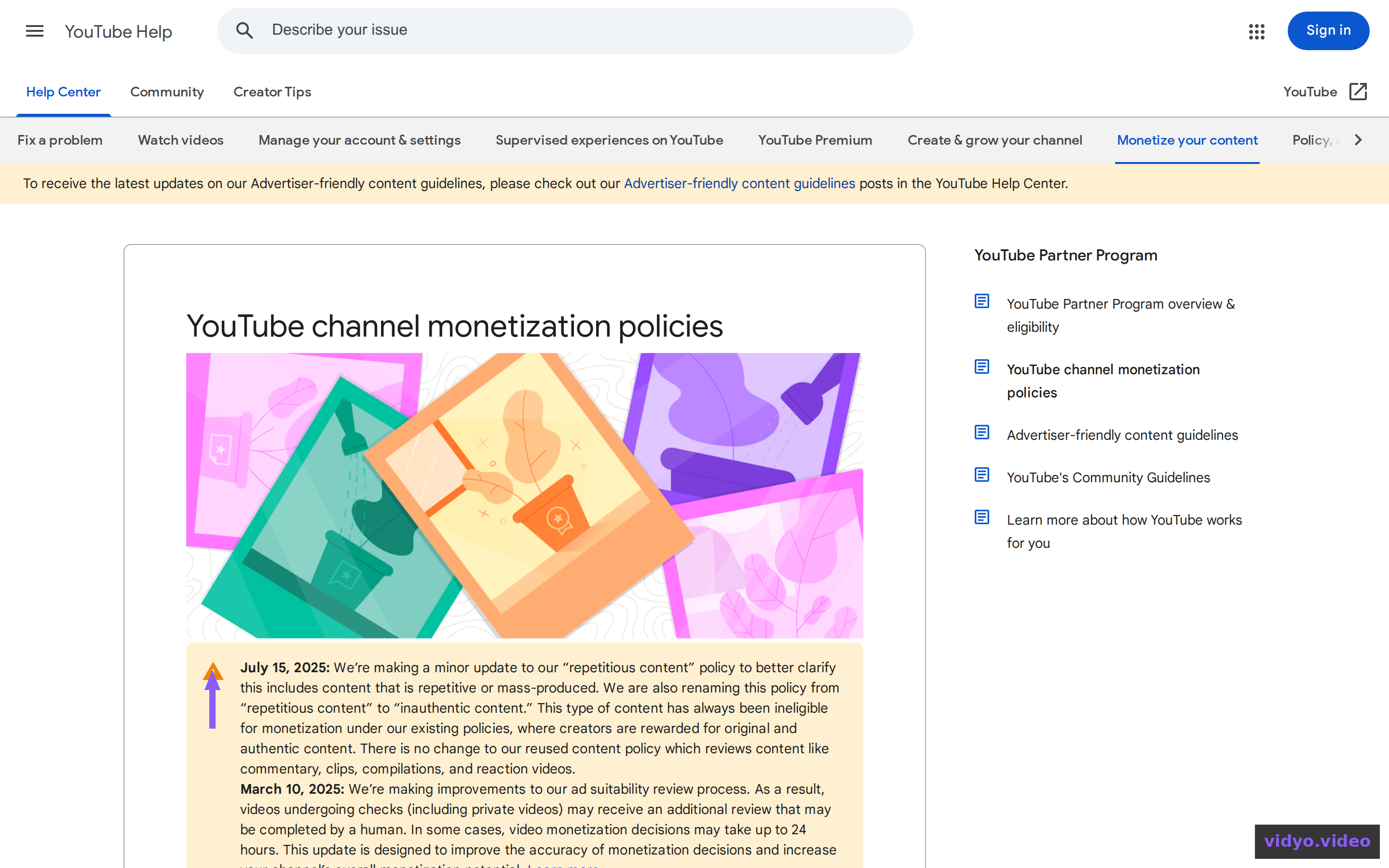
Rule 2 — the inauthentic content policy. This is the one that actually demonetises AI music channels. On July 15, 2025, YouTube renamed its "repetitious content" policy to "inauthentic content" and spelled out that monetised channels must not be "mass-produced, generic, repetitive, or manipulative" — explicitly including "AI-generated content made with generic or unoriginal templates giving the impression of mass production." Note what this means for strategy: the AI label doesn't kill revenue, but uploading forty near-identical lo-fi tracks a week does. One strong video with a real creative decision behind it survives the policy; a conveyor belt doesn't.
Rule 3 — Content ID eligibility. This one deserves its own section, because it's the quiet structural problem no disclosure checkbox can fix.
Content ID: The Claim You Can't File
Content ID is how music actually earns on YouTube at scale. Labels and distributors fingerprint their catalogues; every matching upload anywhere on the platform gets claimed, and the ad revenue routes back to the rights holder. It's passive, it's global, and it's the machinery behind most of the "music industry YouTube money" you've read about.
The eligibility bar is one sentence on YouTube's qualification page: "Copyright owners must have the exclusive rights to the material that's evaluated." Applicants must "give evidence of the copyrighted content for which they control exclusive rights," and the ineligible-content list already excludes mashups, unlicensed music, and anything licensed without exclusivity.
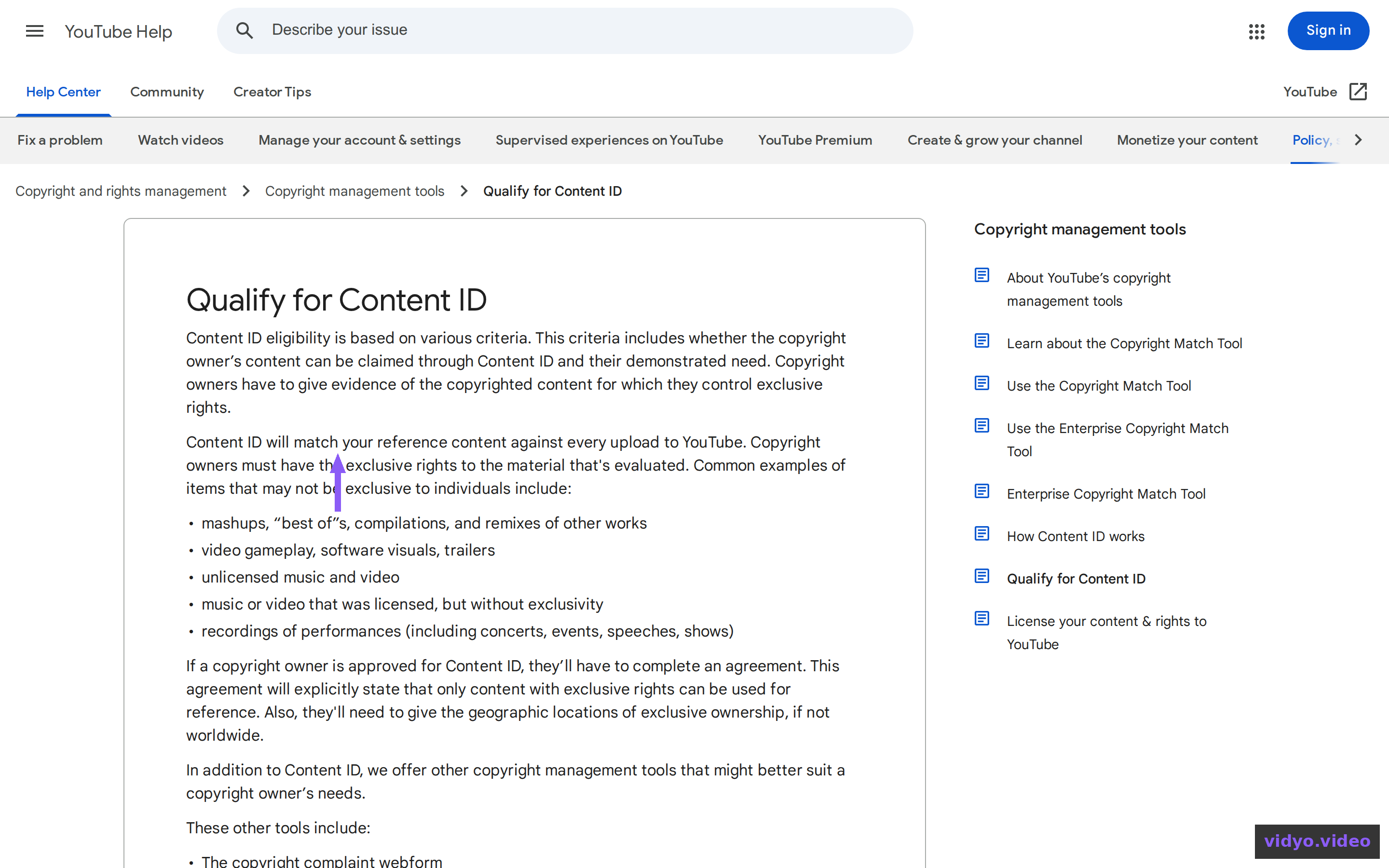
Now connect the two halves of this article. A wholly AI-generated track has no US copyright — there is nothing to hold "exclusive rights" to in the sense the system requires. Suno's assignment gives you everything Suno has, but it can't assign a copyright that never came into existence. The practical consequence: if your Suno track gets popular and a hundred channels re-upload it, you have no Content ID claim to route their ad revenue to yourself. The revenue-protection layer that makes ad income defensible for traditional artists simply isn't available for wholly AI work — one more reason the ads route underpays. (Distributors that offer Content ID as an add-on apply the same exclusivity test, so routing a Suno track through a distributor doesn't fix it; hybrid tracks with substantial human authorship are a different, registrable story — again, Artifactr covers where that line sits.)
What you still have: YouTube's Copyright Match Tool flags full re-uploads of videos you uploaded first, and takedown requests remain possible where you hold some protectable element (your video edit, your artwork, human-written lyrics). It's manual, and it removes rather than monetises. The honest framing: on YouTube, an AI track's defence is speed and branding, not enforcement.
How to Sell Suno Songs When the Video Is Your Asset
Everything above says the same thing: treat the music video as a shop window, not a revenue stream. Here's the release process we'd run, in order. (If you want the general how-do-I-sell-AI-music picture beyond YouTube, our sister guide on EraseAI ranks the economics across every route; this is the video-first version.)
- Generate on a paid Suno plan. Commercial rights come from the subscription, and they attach when the track is generated — a free-tier track can't be retroactively blessed.
- Clean the master before anything touches a platform. Distributor and platform screening for AI artifacts is real; we tested the leading fix in our Undetectr review, where processed Suno tracks went from flagged to accepted. Export a 24-bit WAV — that file is also your sync-ready master.
- Do the metadata like a label would. Real title, consistent artist name, genre and mood tags, BPM, 3000×3000 artwork. Where a distributor or store has an AI-disclosure field, answer it honestly — screening tightened industry-wide in 2025–26 and a caught lie ends the account, not the upload.
- Open a direct store before the video goes live. On Bandcamp-style platforms you keep roughly 82% after fees; on a storefront built for AI-era artists where 100% of each sale is yours, a $7 release pays you $7. Price singles at $5–$10; the buyers your video converts are fans, not bargain hunters.
- Pitch sync while the release is fresh. Music supervisors license moods, and they watch pitches. As of August 2026, the live sync board is showing 23 open briefs worth $21,720 combined, individually ranging $120–$3,000. A pitch is a submission, not a placement — but your finished video is precisely the pitch material a supervisor can say yes to quickly.
- Publish the video with the machinery pointed at conversion. AI disclosure ticked, store link and sync-credits line in the first two lines of the description, pinned comment repeating the link. A Vidyo Release Kit gives you the six platform cuts of the same video so the YouTube upload, Shorts, and socials all funnel to the same store.
How to Make Money From Suno Music: Every Route, Ranked
Ranked by realistic return per unit of effort for a video-first artist. Reasonable people can reorder 2 and 3 for their genre; nobody who has done the arithmetic puts ads first.
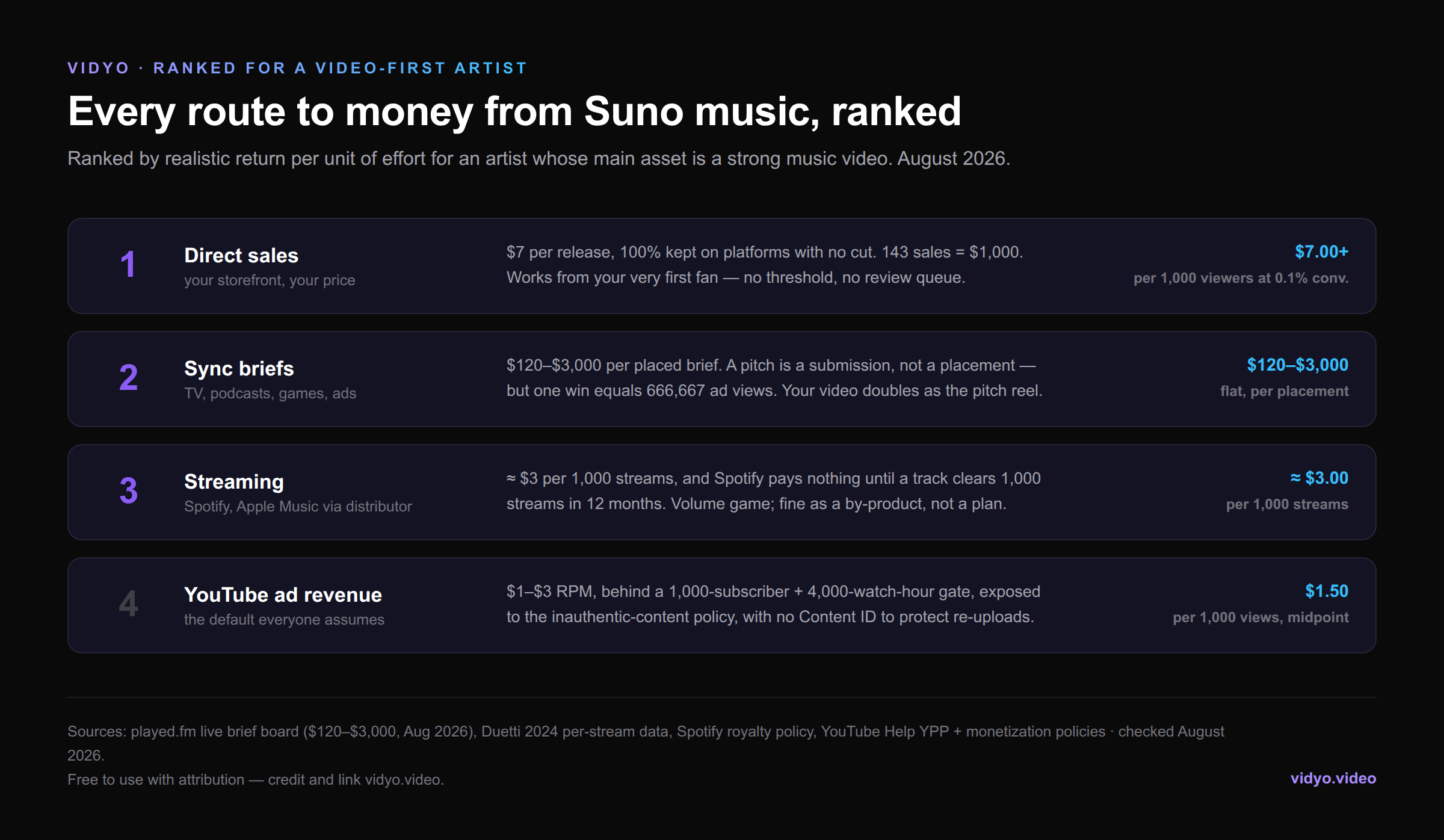
1. Direct sales win on every axis that matters early: no eligibility gate, no screening queue, $7 a sale from fan one, and the price is yours. Where it's the wrong answer: you have no audience anywhere yet — direct sales convert attention, they don't create it.
2. Sync briefs have the best payout-per-win by an order of magnitude. The honest cons: response times run to months, most pitches lose, and briefs are specific — a brooding synthwave brief doesn't want your upbeat pop track no matter how good it is. Treat sync as a weekly habit, not a rescue plan.
3. Streaming pays ~$3 per 1,000 streams and Spotify pays nothing until a track clears 1,000 streams in 12 months. It's fine as a by-product of distribution — your fans expect to find you there — but as a plan it needs volumes that new artists don't have.
4. YouTube ad revenue comes last: $1–$3 RPM, behind the 1,000-subscriber gate, exposed to the inauthentic-content policy, with no Content ID protection on the track. Where it's the right answer: as found money on a channel you'd run anyway. Turn monetisation on once you qualify — just never architect the release around it.
If you want to test the direct-plus-sync stack with your next release, Played.fm's 7-day free trial is the low-friction way in: a card is verified but not charged, the trial covers up to 3 releases and 1 sync pitch, cancelling is one click, and anything you upload stays yours whether or not you continue. After the week it's $19.99/month for Pro. Worth being clear-eyed about what it is not: nobody — Played.fm itself included, whose trial page says exactly this — can promise a sync placement, and if your whole audience lives inside Spotify playlists rather than around a video or social following, a storefront will sit idle until you've built somewhere to send buyers from.
Suno Monetization at Scale: What Changes
The rules bend as the numbers grow — mostly against volume strategies.
- Thresholds stack. YPP's 1,000 subscribers + 4,000 watch hours and Spotify's 1,000-stream minimum both mean early catalogue earns nothing from the volume routes while every direct sale still pays.
- Catalogue dilution is real. Fifty tracks promoted by nobody earn less than five tracks each carried by a good video. Every upload after your tenth competes with your own back catalogue for the same audience minutes.
- The inauthentic-content policy scales with you. The faster you publish, the more your channel pattern-matches to "mass-produced". Spotify removed 75 million spammy tracks in a single year; YouTube's July 2025 policy is the same immune response. Slow, distinct releases are the moat.
- PRO royalties stay closed to wholly AI work. ASCAP and BMI follow the Copyright Office line, so performance royalties only enter the picture for tracks with registrable human authorship — one more revenue layer that favours hybrid workflows as you professionalise.
The through-line of this whole article is one sentence: on YouTube, an AI music video is the best sales asset and the worst revenue stream you own. Publish it, disclose it, let it earn its $1.50 — and make sure every thousand people it reaches has a $7 door to walk through and a sync pitch working in the background.
Eddie Mathews is the music & AI tools editor at Vidyo, where he tests the release pipeline — generation, artifact removal, distribution, and monetisation — on real tracks. Rates and policy quotes in this article were checked against the linked primary sources in August 2026; if a number has moved, tell us and we'll re-run the math.