Tools for working AI musicians
Hands-on reviews and field-tested guides. We ship everything we recommend.
Can You Upload AI Music to Spotify? What Actually Happens
Spotify allows AI-generated music and says all music is treated equally regardless of the tools used to make it. So why do AI tracks vanish? Because you never upload to Spotify — you upload to a distributor, and that's where the screening happens.
Can You Sell Suno AI Music? Commercial Rights vs Copyright
On a paid plan Suno grants commercial use and takes no share of your royalties — and states outright that it cannot grant you copyright. Here's what each tier permits, where copyright law lands on AI-assisted music, and the third gate that stops more releases than either.
Suno's Watermark: What It Is, and How to Get It Off Your Tracks
Suno has watermarked its output since v3 — your back catalogue is already marked. Here's what the watermark actually is at a technical level, why EQ and re-encoding can't touch it, and what to do before the September 3 export deadline.
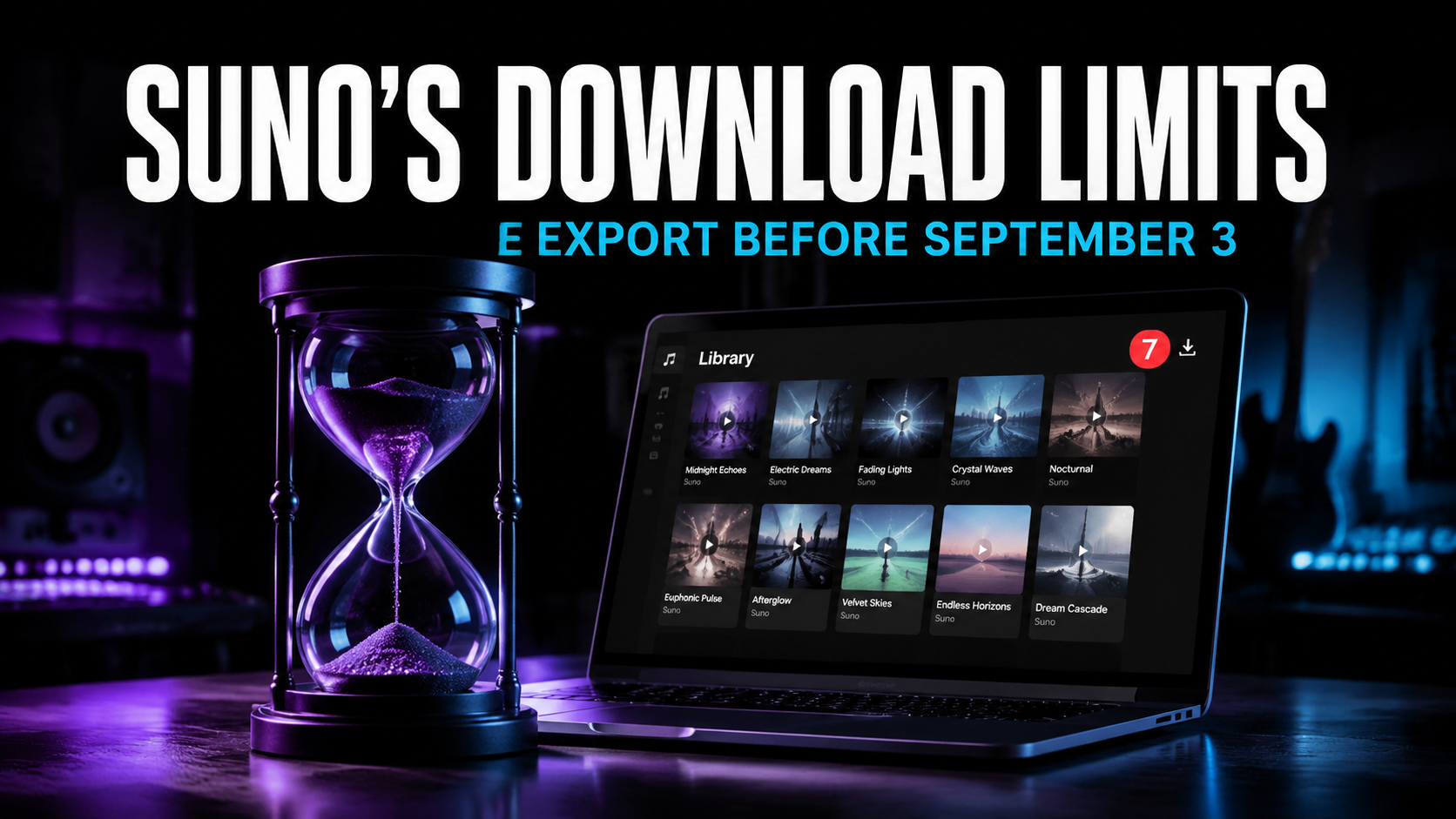
Suno's New Download Limits: Export Before September 3, 2026
From September 3, 2026 Suno meters downloads: 7 lifetime on Free, 20/month on Pro, 60/month on Premier — applied retroactively to every song in your library. Until the deadline there's no cap at all. Here's the fine print most coverage missed, and how to get your catalogue out in one pass.
Content ID for AI Music: The Claim You Can't File (2026)
Content ID requires "exclusive rights to the material that's evaluated" — and a wholly AI-generated track has no copyright to hold exclusively. The consequence chain, the protection ladder that's still open, and the strategy that needs no enforcement at all.
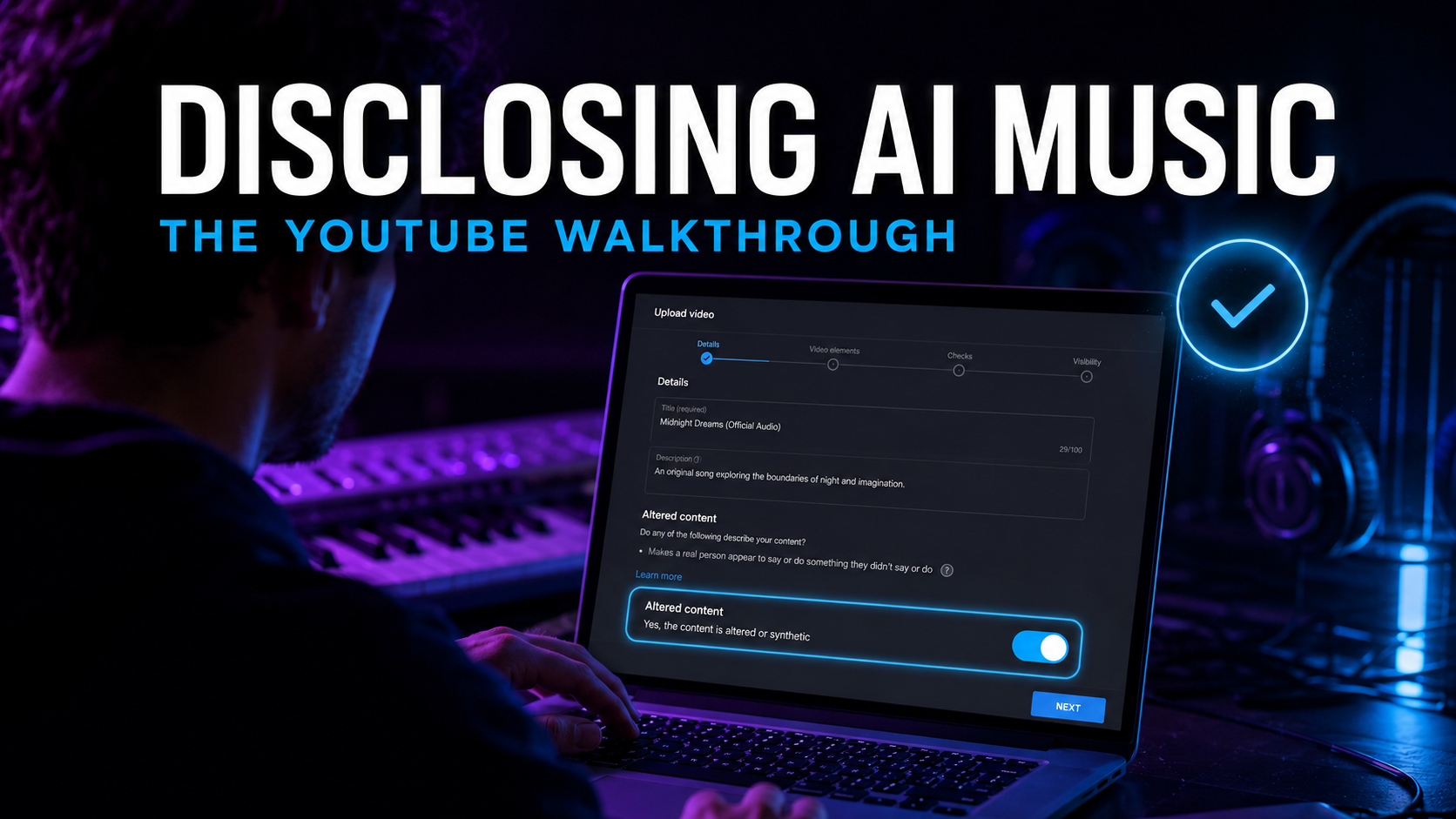
How to Disclose AI Music on YouTube (2026 Walkthrough)
The altered-content flag takes one toggle and doesn't touch reach or monetisation — hiding it is what gets channels suspended. The exact walkthrough, plus the Shorts, hybrid-track, and animated-visual edge cases.
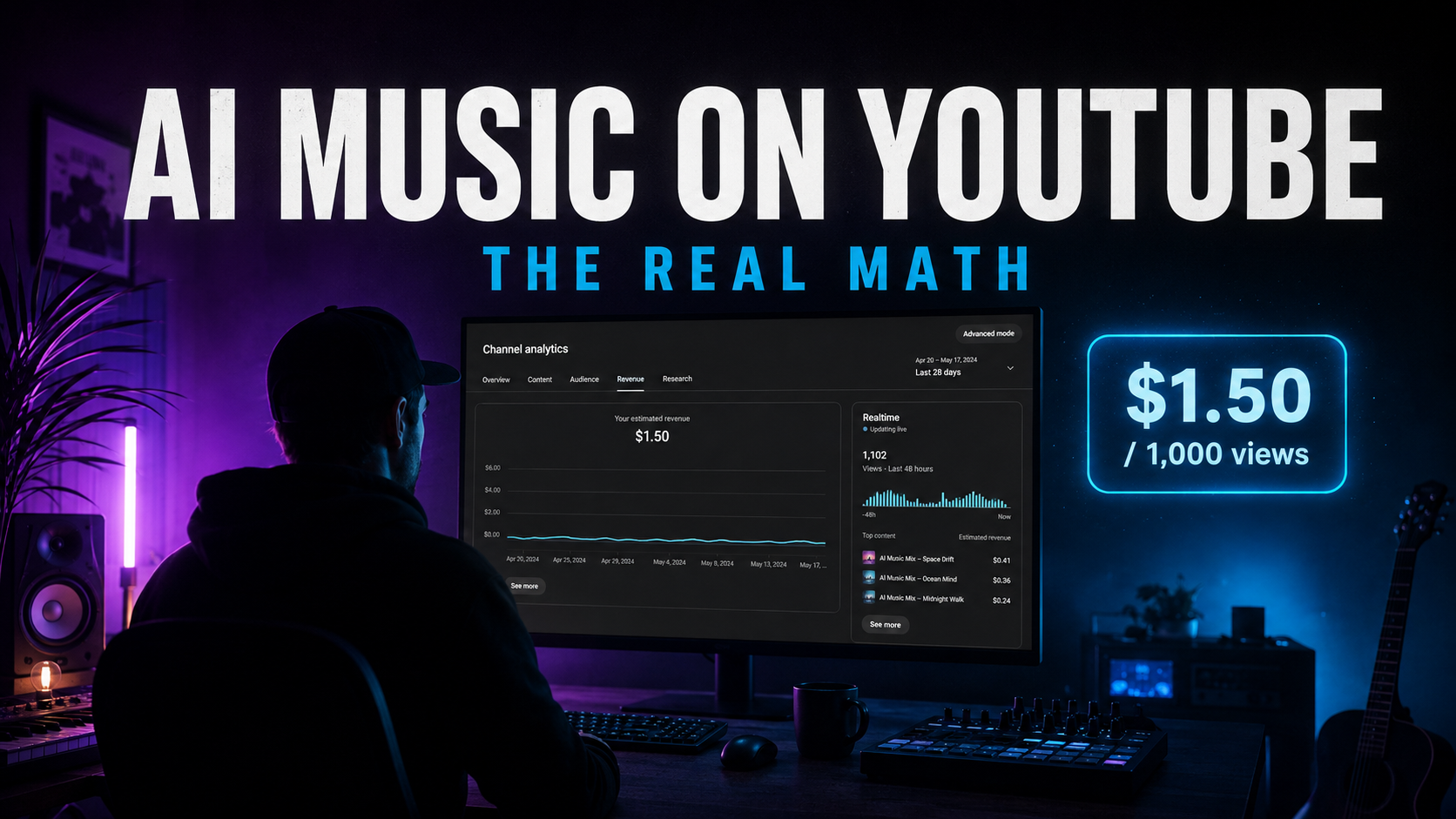
Suno Monetization on YouTube: The Real Math (2026)
At real music-channel RPMs, an AI music video earns about $1.50 per 1,000 views from ads. We show the arithmetic — and the routes that pay 5–12× more from the same video.
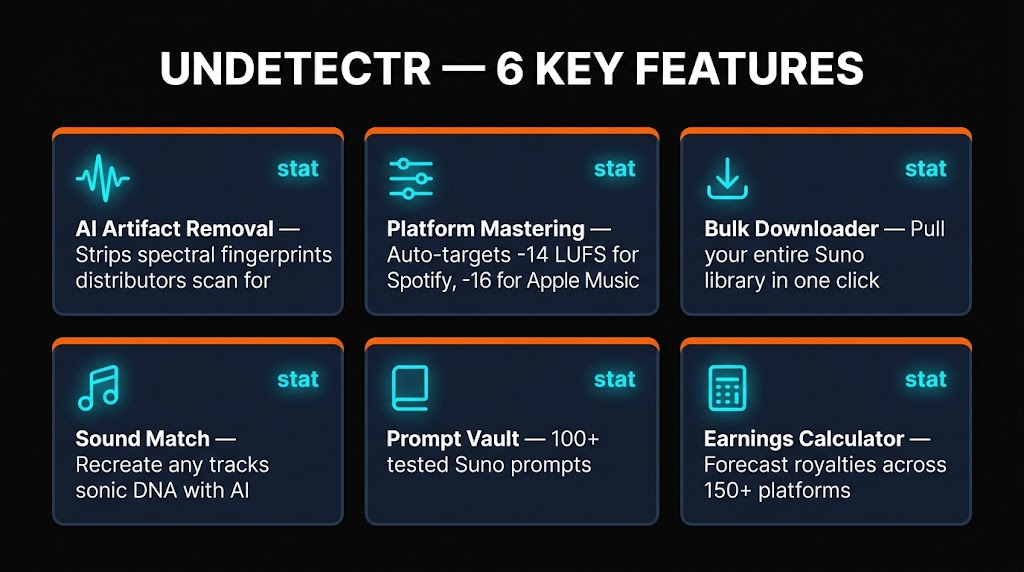
Undetectr Review (2026): The AI Music Artifact Remover That Finally Gets Past DistroKid
We tested Undetectr on Suno 5.5 — the $39 one-time tool that strips AI fingerprints so DistroKid, Spotify, and Apple Music accept your tracks. Verdict: 95%.